


TRON Energy vs Bandwidth: Which Resource Does Your Transfer Use?
Understand TRON Energy and Bandwidth, compare native TRX and USDT transfers, and check both resource shortfalls before paying network fees.
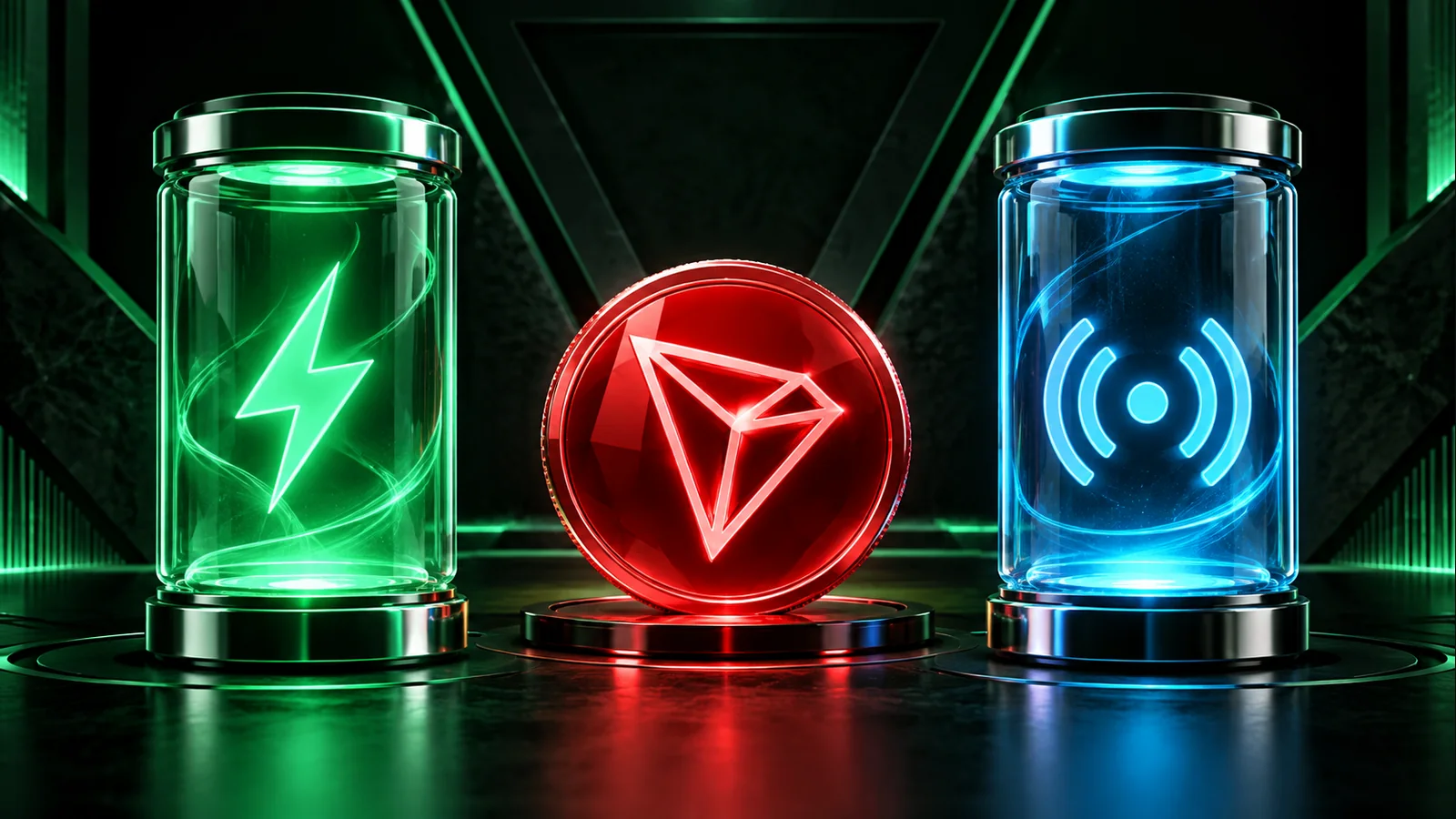
TRON separates smart-contract computation from transaction data. Energy accounts for contract execution; Bandwidth accounts for the data a transaction adds to the network. These resources are measured separately and cannot be substituted for each other.
A native TRX transfer
An ordinary transfer of native TRX between accounts does not run the USDT token contract. Bandwidth is the resource to check for its transaction data. If the relevant allowance is insufficient, network rules can require a TRX charge.
This does not mean every operation involving TRX has the same cost. Account activation, permissions and smart-contract interactions are different operations. Inspect the exact transaction rather than using its asset name alone to guess the fee.
A USDT TRC-20 transfer
Sending USDT calls its TRON token contract. The transaction therefore has both data and computation to account for. A wallet can have enough Bandwidth but insufficient Energy, or enough Energy but insufficient Bandwidth.
The TRON resource-payment documentation explains how resources and TRX charges cover execution. The wallet's preview and actual transaction receipt are more useful than a universal fixed fee copied from an old article.
Limits are different from available balances
A resource limit describes capacity. Recent consumption reduces the portion available right now, and delegation changes which account can use a stake-backed share. Looking only at a maximum number can therefore produce a misleading estimate.
For example, imagine a wallet with a hypothetical Energy limit of 100,000 and 80,000 still counted as used. Its immediately available capacity is much closer to 20,000 than to 100,000 before further state changes. The illustration is not a prediction of the Energy needed for any particular USDT transfer.
Choose the right resource to rent
First estimate the intended transaction and inspect the sending account. Then cover the missing resource rather than choosing a package solely because its name includes TRON.
- For a native transfer with a Bandwidth shortage, evaluate Bandwidth rental.
- For a contract transfer with an Energy shortage, compare the current Energy packages.
- For either route, include the rental payment and any remaining network expense in the total.
- Give the resources to the sending address that will execute the transaction.
A resource rental is not a conversion of USDT or TRX into another token. If your goal is to change the asset you hold, use the separate TRX–USDT exchange and account for its own sending transaction.
Plan repeated operations
Resources already used by one transaction are not immediately available for the next merely because a rental is still active. Concurrent operations can consume the same account's remaining capacity. The resource recovery guide explains why a rolling recovery window differs from a daily reset.
For multiple payments, record expected use, existing available resources and the rental expiry. Recheck after a failed transaction as well: failure can still consume resources. See OUT_OF_ENERGY troubleshooting before retrying.
Verify the result
Compare the transaction receipt with the wallet estimate: note Energy consumed, Bandwidth consumed and any TRX charged. Keep the exact TXID so you do not accidentally inspect a rental payment instead of the token transfer.
This separation makes future estimates more useful. You can identify whether the recurring cost comes from contract execution, transaction data or another operation, then choose a matching solution instead of repeatedly adding the wrong resource.