


TRON Energy API Integration: A Reliable USDT Withdrawal Workflow
Plan a USDT withdrawal workflow with Energy estimates, idempotent rental orders, delivery checks and transaction reconciliation using the TronBid API.
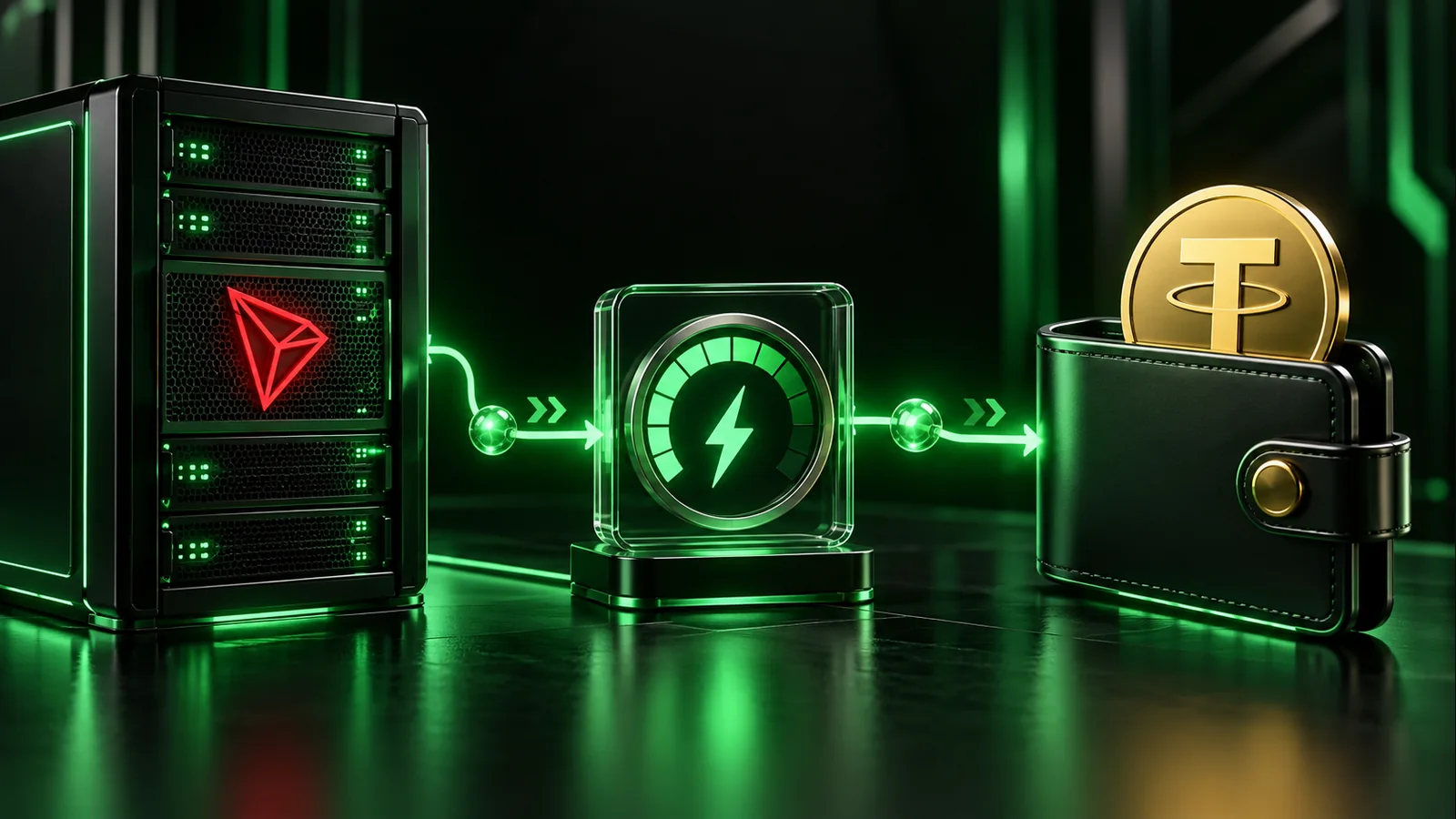
An Energy rental API solves one part of a USDT withdrawal: obtaining resources for the sending wallet. Your application must still track payment, resource delivery and the token transfer as separate operations. This separation makes timeouts and retries easier to handle without paying or withdrawing twice.
Estimate resources for the actual sender
Start with the sending wallet, destination, token contract and transfer amount. Estimate the intended USDT contract call and inspect the sender's available Energy and Bandwidth. A balance captured before another withdrawal may already be outdated.
Read the rental cost breakdown and use the calculator when planning the integration. For concurrent withdrawals, reserve resource capacity per sending wallet instead of allowing every request to count the same available Energy.
Read the current catalog and quote
The TronBid API documentation describes the current endpoints, request fields and errors. The public package catalog is GET /api/public/quick-rent/skus. Rental API endpoints use the /api/v2/quick-rent base path.
Read supported packages and durations before POST /quote. Use its availability and price response for that attempt; do not hardcode package sizes or assume a previous quote remains available indefinitely. Keep the API key on your server and send it in the documented Authorization header.
Create one order for one rental intent
POST /orders accepts an idempotency_key. Persist a stable key for the rental intent and reuse it when retrying that same request after a timeout. The documented key length is 8–128 characters. A new key creates a new intent rather than making an uncertain previous request safe.
Set target_address to the wallet that will send USDT. In on-chain payment mode, an omitted target defaults to payer_address; that default is unsuitable when one treasury pays for resources used by another withdrawal wallet. See how to verify the resource recipient.
Keep rental payment separate from delivery
An on-chain order begins with payment instructions. Follow its pay_address, amount_trx and expiry, and record the payment transaction ID before retrying any step. The API currently allows one open pending-payment intent per payer; handle the documented conflict by reconciling the existing order.
Balance payment is a separate mode that must be enabled for the API key and funded. Do not silently switch modes on a retry. A paid order or a delegating status does not mean the withdrawal wallet already has usable resources.
Wait for the order result, then check resources
Read GET /orders/:id with bounded polling and backoff, respecting rate-limit responses. Handle delegated, failed, expired and cancelled results explicitly. Where returned, check effective_energy_amount rather than assuming payment always produced the originally requested amount.
After successful delivery, refresh the sending wallet's resources before signing USDT. Other jobs may have consumed Energy in the meantime. Review Energy and FeeLimit failure causes when the estimated call still cannot execute.
Reconcile the withdrawal independently
Persist your internal operation ID, rental order ID, payment TXID and withdrawal TXID separately. Rental idempotency does not make a blockchain transfer idempotent. Once a signed withdrawal has been broadcast, inspect that transaction's result before creating a replacement transfer.
Use the transaction receipt checklist for confirmation. A timeout means the outcome is unknown until checked; it is not proof of failure or an automatic refund. Start integration tests with mocked API responses and isolated accounts, including duplicate requests, delayed delivery, insufficient resources and unavailable providers.