

Understanding USDT TRC-20 Fees and How to Reduce Them
Learn how Energy and Bandwidth work on the TRON network, why the first USDT TRC-20 transfer is more expensive, and how Quick Rent helps reduce TRX spending and save on fees.
Why USDT TRC-20 Fees Vary and How to Save on TRON

Introduction: Why Did Yesterday's Transfer Cost 3 TRX and Today's Cost 18 TRX?
TRON users are often surprised by the network's strange behavior. One USDT TRC-20 transfer is almost free, while the next suddenly burns dozens of TRX. It almost feels as if the blockchain is rolling dice and randomly deciding how much to charge.
TRON uses two resources — Bandwidth and Energy. These resources determine how much TRX is spent to execute a transaction.
And once you understand how the system works, you can significantly reduce your costs. That's exactly what Quick Rent helps you do in just a couple of minutes.
How TRON Fees Work
Unlike many blockchains, TRON does not charge a fixed transaction fee.
Instead, operations consume two resources:
- Bandwidth
Energy.
Bandwidth is used for regular TRX transfers.
USDT TRC-20 transactions, however, interact with a smart contract, which means they require Energy.
If there isn't enough Energy available, the network automatically compensates by burning TRX.
That's why users sometimes encounter unexpectedly high fees.
Why the First USDT TRC-20 Transfer Costs More
Many users have noticed an interesting effect.
The first transfer from a new address often costs noticeably more than subsequent ones.
The reason is simple.
During the first transaction, additional processes inside the smart contract are activated. Some resources are also used to create records in the blockchain state.
Once those records already exist, future transactions require less Energy.
In other words, starting a cold engine always costs more than driving one that's already warmed up.
Why Fees Can Change
Several factors affect transaction costs:
- Available Energy
- Available Bandwidth
- Whether it's the first transfer or not
- Smart contract state
- Network load.
That's why a transfer might cost 2 TRX today and 15 TRX tomorrow.
Surprises are great on birthdays, but not when sending USDT.
Before choosing a rental volume, estimate Energy for your USDT TRC-20 transfer. The calculator provides an estimate; check the current checkout price and available resources separately.
What Is Quick Rent?
Quick Rent is an instant TRON Energy rental service.
Instead of buying and freezing large amounts of TRX, users can rent the required amount of Energy for several hours or days.
After payment, Energy is automatically delegated to the specified address, providing the resources needed to execute transactions.
No complicated settings, staking, or waiting.
How Quick Rent Reduces Costs
Imagine a common situation.
You want to send USDT TRC-20, and without Energy the network may burn 15–20 TRX.
Instead, you can rent the required Energy package through Quick Rent for just a few TRX and perform the same transaction at a much lower cost.
The benefits are obvious:
- No need to freeze large amounts of TRX
- Energy arrives automatically
- Pricing is known in advance
- Transaction costs become predictable
- Savings can reach 80–90%.
This is especially valuable for active users, exchangers, and payment processors.
Who Can Benefit from TRON Energy Rental?
Quick Rent is useful for:
- USDT TRC-20 users
- Exchange services
- Crypto payment processors
- Arbitrage teams
- High-volume transaction users
- Anyone tired of feeding extra TRX to the network.
Conclusion
USDT TRC-20 fees on TRON are determined not by randomness, but by the availability of Energy and Bandwidth.
The first transfer is usually more expensive, and insufficient Energy leads to TRX being burned.
Instead of overpaying, users can simply rent Energy through Quick Rent and receive the required resources in advance.
As a result, transactions become cheaper, and your wallet no longer experiences stress every time you send USDT.
Frequently Asked Questions
Related on this site

TRON Energy Calculator Guide for USDT TRC-20 Transfers
A guide to estimating Energy for USDT TRC-20 transfers with the separate TronBid calculator. Learn how the recipient's USDT balance affects estimates and how to review the available rental flow. Estimates are not a guarantee of the final fee or delegation time.
Read more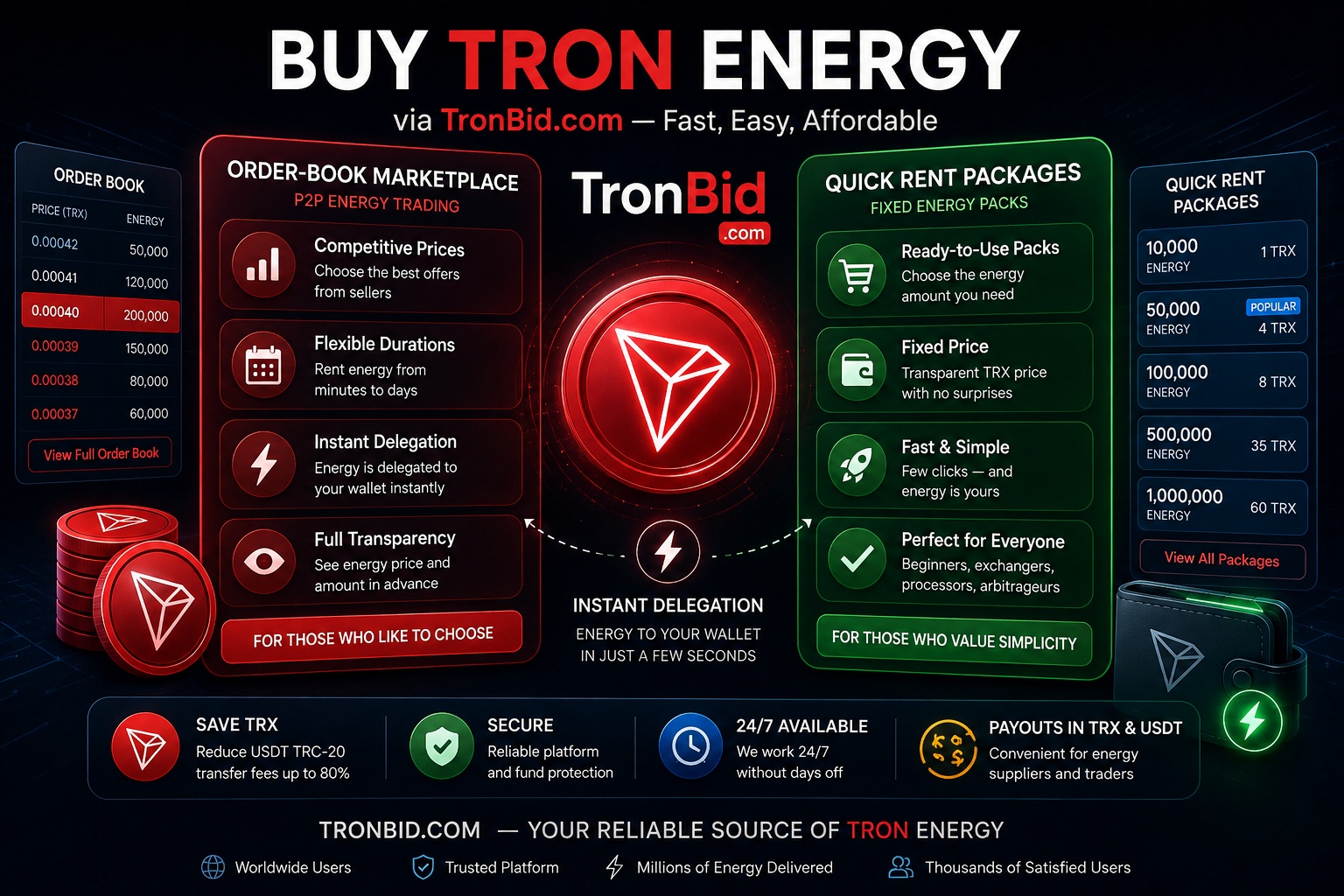
Buy TRON Energy: SELL Offers, BUY Orders and Quick Rent
Compare the three purchase flows on TronBid: buying an existing SELL offer, creating a BUY order that waits for a seller, and using the separate Quick Rent service. Check price, term and delegation status before using the Energy.
Read more
TronScan Guide: Check TRON Addresses, Transactions and Fees
Learn how to use the external TronScan explorer to inspect TRON addresses, transaction status, resource usage and USDT TRC-20 fees. This article explains the steps and public tags; address and transaction lookups take place on TronScan.
Read more