


TRON Energy Rental API for Exchanges and Payment Services
Plan API-based Energy rental for USDT withdrawals: sender targeting, live pricing, payment modes, idempotency and separate delivery verification.
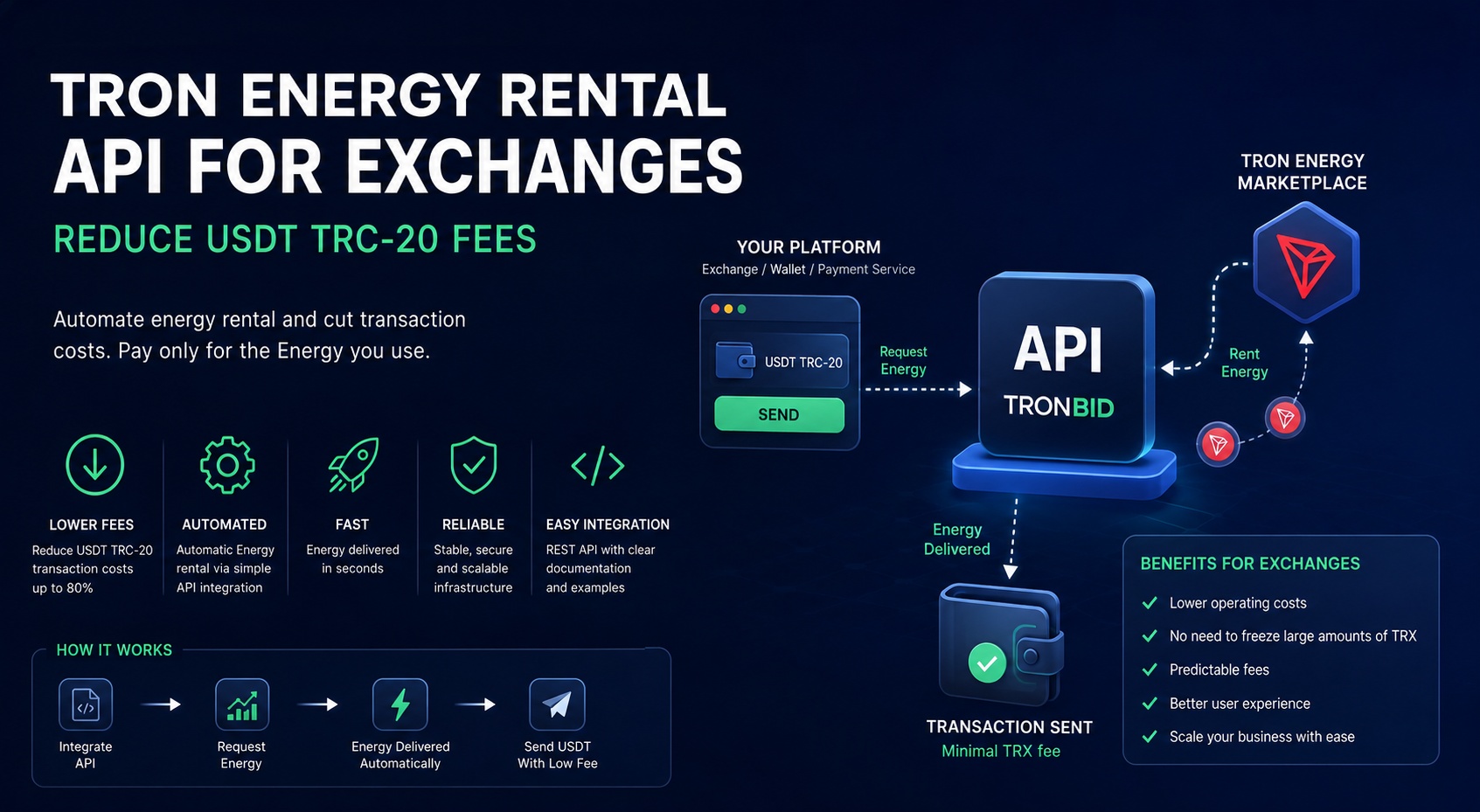
An exchange or payment service can use a TRON Energy rental API to provision resources before USDT withdrawals. The practical benefit is automation: the application can read available packages, request a price, create a rental and follow its result. Whether it reduces cost depends on actual resource demand and the current quote.
Separate resource procurement from the withdrawal
A resource order is not a USDT withdrawal. Keep the rental payment, delegation and token transaction as distinct stages with their own identifiers. A successful payment does not mean resources have arrived, and a delivered rental does not mean USDT was sent.
The detailed API withdrawal workflow covers the sequence and recovery from uncertain results.
Target the wallet that sends USDT
Resource estimation may examine the destination's token state, but standard USDT execution consumes resources at the sending wallet. Set the rental recipient accordingly. If one treasury pays for Energy used by several withdrawal wallets, do not assume the payer is also the resource target.
The current API documents target_address separately from payer_address. Read their defaults in the live API documentation before integrating. Never send private keys in a rental request.
Choose a documented payment mode
The API supports its documented on-chain flow and an account-balance mode when enabled for the key. Follow the returned price, expiry and payment instructions for the selected mode. An underpayment, expired intent or insufficient balance requires handling the actual response rather than assuming delivery.
Keep credentials server-side, restrict access within your application and respect rate limits. Use the current catalog and documentation instead of copying old package values from a blog example.
Make retries safe at each stage
Persist a rental idempotency key and reuse it for retries of the same intent. Save the order ID and any broadcast payment TXID. Poll with backoff and reconcile an unknown outcome before creating another rental.
These controls do not make a blockchain withdrawal idempotent. Store its signed transaction ID and inspect the execution receipt before deciding whether a replacement is appropriate. Concurrent jobs must also avoid allocating the same sender resources twice.
Measure the full operating cost
Track quoted rent, actual delivered Energy, residual TRX burn, Bandwidth costs and failed execution costs. Compare that total against the alternative for the same withdrawal demand. There is no universal saving percentage or delivery-time guarantee.
For continuous demand, compare staking and rental as well. For variable demand, rentals can supplement existing resources without requiring every peak to be covered by owned stake. Start with the cost model and verify delivery using the delegation checklist.